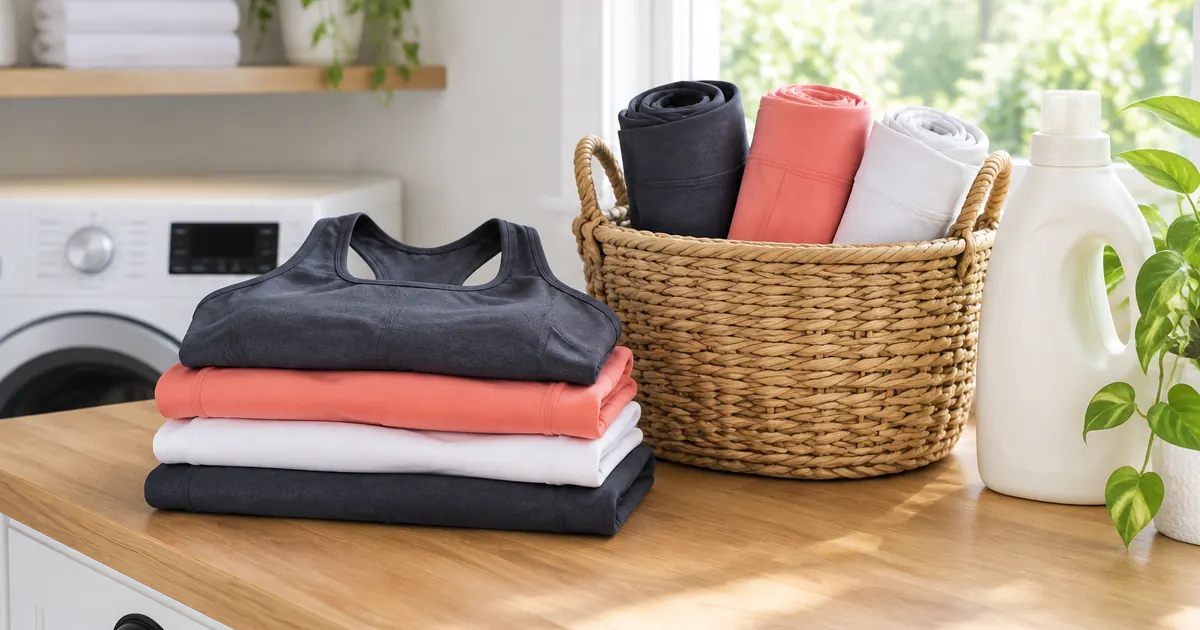
Performance activewear is expensive because the fabric is engineered — elastic fibers, moisture-wicking cross-sections, bonded seams. All of that engineering can be undone in one laundry cycle. The good news: caring for spandex blends and technical knits is simple once you know the three things that destroy them.
Enemy #1: fabric softener
This is the one that surprises everyone. Fabric softener works by coating fibers in a waxy film. On cotton towels that is fine. On performance knits it is a disaster: the coating fills the micro-channels that wick sweat, kills stretch recovery in spandex, and traps odor bacteria inside the fabric. A softener-washed legging smells fine out of the drawer and then smells like a locker room ten minutes into a workout.
The fix: never add softener — liquid, sheets or dryer sheets — to anything with spandex or "performance" on the label. If you must soften towels and sheets, wash them in separate loads.
Enemy #2: heat
Elastane (spandex) is a heat-sensitive polymer. Dryer heat does not just shrink it — it permanently embrittles the elastic fibers, which is why old leggings sag at the knee and waistband even though they fit. Every trip through a hot dryer takes permanent life out of the garment.
The fix: machine wash cold, hang dry. Always. A drying rack near airflow dries a sports bra in about four hours. The one exception: our AeroFlex Trail Rain Jacket and other shells can take a brief tumble on low heat to reactivate their water-repellent finish — check the care tag, ten minutes maximum.
Enemy #3: friction and hooks
Pilling — those little fabric balls — comes from abrasion. The biggest culprits in the wash: velcro straps, zippers and bras with hook closures tumbling against knit surfaces.
The fix: close all hooks and zippers, turn garments inside out, and use a mesh laundry bag for anything with hardware. The Studio Cropped Zip Jacket should always be zipped closed before washing to protect both its own teeth and everything else in the drum.
The complete routine, start to finish
- Rinse or air out ASAP. Sweat starts breaking down elastane if it sits. A quick cold rinse after a sweaty session — or at minimum, hanging the gear to dry instead of leaving it in a gym bag — doubles garment life.
- Wash cold, gentle cycle, inside out. Cold water protects elasticity and color; the gentle cycle cuts abrasion. Inside-out protects printed logos and outer surfaces.
- Use regular detergent, less of it. Performance fabrics do not need special detergent for most people. Use about two-thirds of your normal dose — excess detergent leaves residue that traps odor.
- No softener, no bleach. Bleach breaks spandex directly.
- Hang dry, away from direct sun. UV degrades elastic fibers over months of balcony drying. Indoors or in shade is better.
- Store folded, not stretched. Hanging bras by their straps stretches the band over time. Fold them cup-to-cup instead.
Special cases
Seamless knit bras and tops
Seamless pieces like the PulseKnit Cloud Bra are knitted in one piece — there are no seams to fail, but the knit itself is delicate. Mesh bag, cold water, no softener, and remove the cups before washing so they dry flat and keep their shape.
Compression leggings
Compression depends on elastane percentage, which is exactly what heat and softener destroy. Wash after every wear — stretched-out compression is the number-one reason leggings stop supporting.
White and light colors
Wash whites like the Airflow Racerback Tank separately or with other lights. Skip chlorine bleach — oxygen bleach (sodium percarbonate) brightens without attacking spandex.
When is it actually time to replace gear?
- The waistband no longer grips through squats.
- The fabric turns translucent at the seat when stretched.
- A bra band rides up even on its tightest setting.
- Pilling covers friction zones (inner thighs, under arms).
Odor emergencies: the strip-and-soak method
If gear already smells permanent — the smell returns the moment it warms up on your body — detergent alone will not fix it. Fill a sink with cold water, add one tablespoon of white vinegar per liter, and soak the garment for 30 minutes before a normal cold wash. Vinegar dissolves the bacteria film that detergent residue locks in. For stubborn cases, a second soak with a teaspoon of baking soda finishes the job. Never reach for bleach — it destroys elastane on contact.
Travel and gym-bag protocol
Sweaty gear sealed in a bag for eight hours does more elastane damage than a month of proper washing. If you cannot rinse at the gym, wring the garment, roll it in a towel to pull out moisture, and carry it in a breathable mesh bag — not sealed plastic. Air it out the moment you are home. The five minutes this takes is the difference between gear that lasts two years and gear that lasts five months.
When two or more of those show up, the garment has served its life. Take care of the replacement the same way you took care of the original — the leggings collection and sports bra collection are both built to survive this routine for years.
Train in gear that passes the tests
Every Shefit piece is squat-tested, wash-tested and wear-tested before it ships. Free US shipping, tax free, 30-day returns.
Shop Bestsellers